EMT Practice Test

1. Question Content...

Question List

Question1: Scenario:
The entire network consists of the following activities and relationships. Activity A is twenty days long and is tied to Activity B, a ten-day activity, with a finish-to-finish tie with a lag value of five Activity B is tied to Activity C, a twenty-day activity, with a start-to-start relationship with a lag value of five.

PSP Activities Table
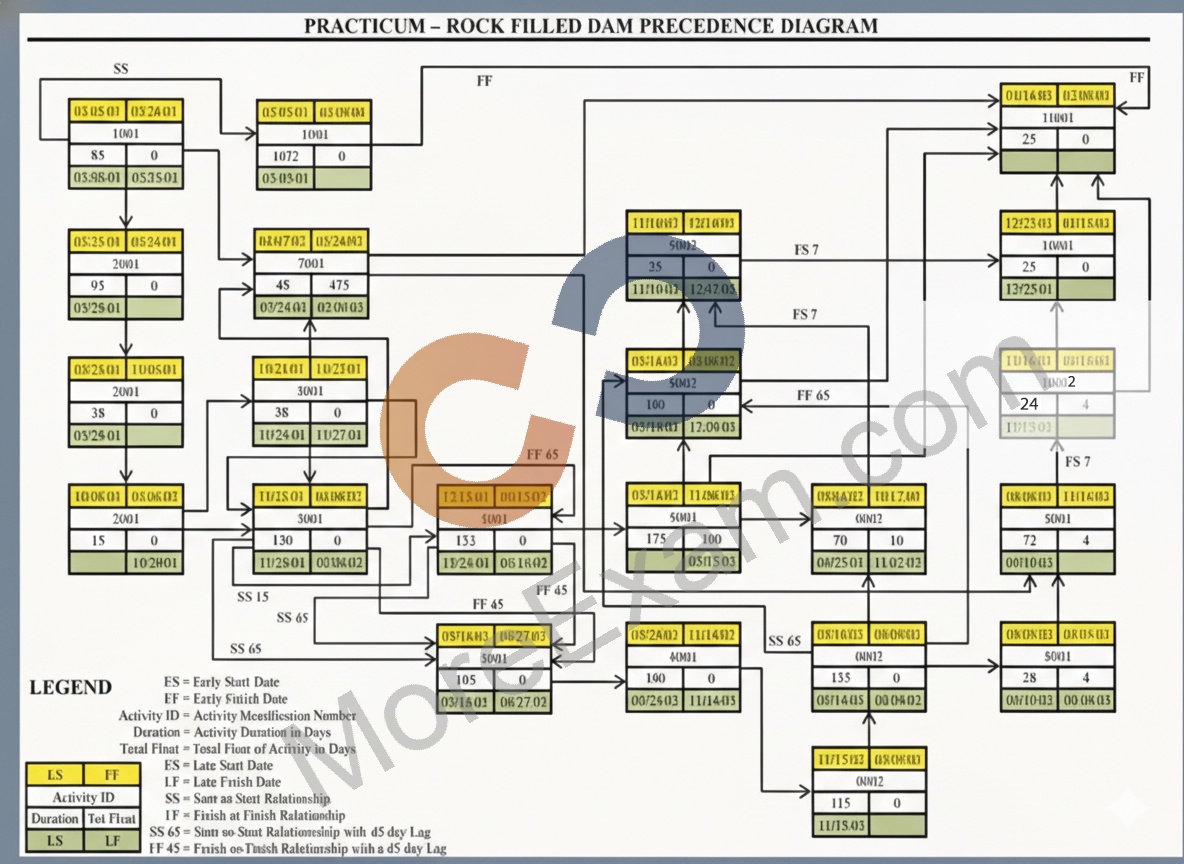
Scope Known about Rock-Filled Dam Project:
The dam requires river diversion and work over two or more rainy seasons. The contract is lump sum, competitively bid, and will be self-performed. The owner has attempted to shift all risk to the contractor by employing "no differing sit conditions" and "no damage for delay" clauses. There is a bonus/penalty provision of $2,500 per calendar day for early or late delivery. The early completion bonus is capped at $500,000, with no cap for late delivery penalty.
Liquidated damages end at the finish of demobilization. Indirect costs per calendar day are $2,800 for the
"normal" schedule and $3,200 for the "crashed" schedule. The winter/wet weather season is 151 days between October 15 and March 25 of each year, reduces the efficiency of the contractor's operations by 20% and costs the contractor $10,000 per day. Assume a start date of March 5, 2001 and use a 7-day work week.
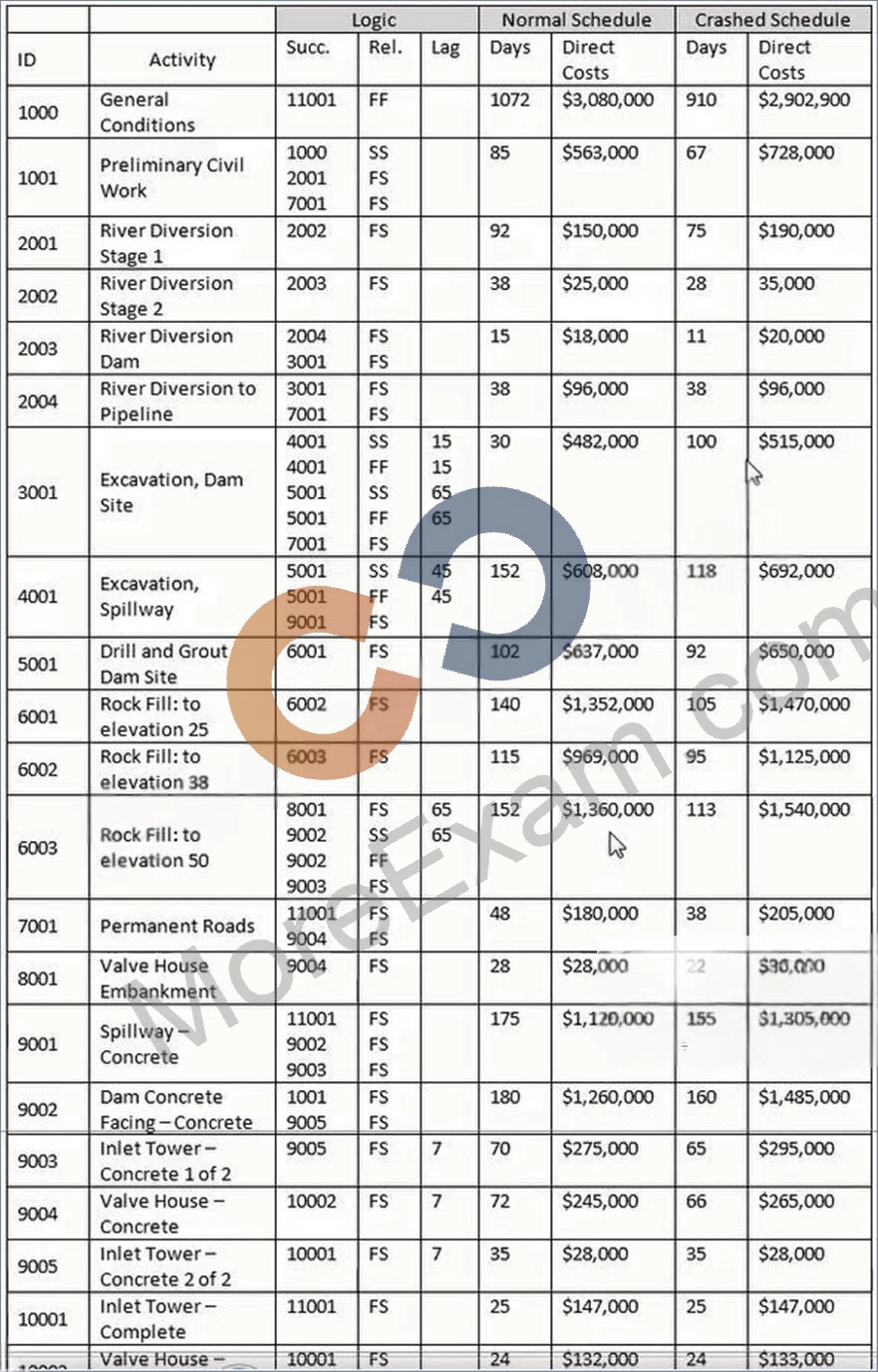
The following table lists work activities as planned by the contractor.

Theoretically construct a summary activity for only those activities with a finish-to-start relationship for Activities 8001 through 10001. Using the "normal" schedule, what is the cost of this hammock?

Question2: Constraints control events or activities that __________________.

Question3: For which of these delays should an owner grant a time extension?

Question4: Which letter of the alphabet best approximates the graphical shape of a project's cumulative cost baseline, or budgeted cost of work scheduled?

Question5: Why does activity 1001 have two successor activities?
Question6: When reconstructing a CPM schedule electronically from a hardcopy, which of the following is NOT required to determine the critical path?

Question7: Which of the following will always describe the critical path? The path with

Question8: In order for a claimant to be entitled to an extension of contract time for a delay event (and further to be considered compensable):

Question9: Determine the correct formula and date for the late finish for Activity 2002.

Question10: Theoretically construct a summary activity for activities 6001 through 6003. Identify the governing predecessor and successor activities for the hammock:

Question11: What is the primary difference between the arrow diagramming method (ADM) and the precedence diagramming method (PDM)?

Question12: What does the narrow band at "Y" represent?

Question13: Determine the correct formula and date for the late finish for Activity 2001.

Question14: The expected remaining cost needed to complete an activity, group of activities or the project is the____________.

Question15: Which of the following are NOT considerations or constraints of the planning process for construction scheduling?

Question16: Which of the following types of delay will NOT result in a time extension and additional compensation for a contractor?

Question17: Identify the minimum project duration.

Question18: Which of the following is NOT true?

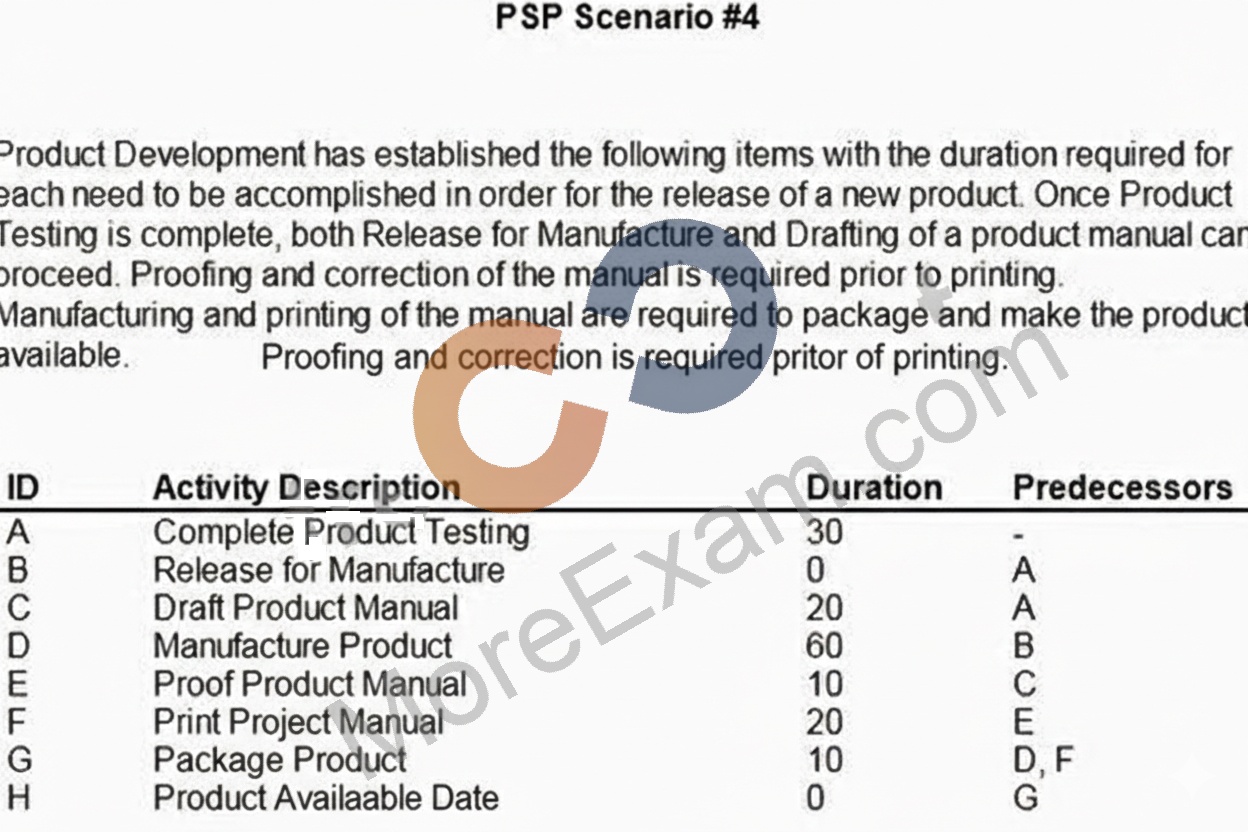
Question19: How many work days does it take to move the product from testing to sale?
Question20: Using the "normal" schedule, what is the early finish date of activity 10002 and its total float?

Question21: Total float is defined as the amount of time an activity can be delayed without impacting

Question22: Determine the correct formula and date for the late start for Activity 9001.

Question23: Using the "normal" schedule, if you start Activity 7001 on April 1, 2002, and using a 5-day workweek, what the finish date for Activity 7001?

Question24: Activity C is a

Question25: Activity durations are normally estimated in an intuitive and subjective way. All of the following will improve duration accuracy EXCEPT

Question26: If after calculating a schedule an activity exhibits negative total float, which of the following is certain? The activity

Question27: Time-scaled logic diagrams are

Question28: What method would be the best way to determine the most likely as-built critical path of a project that is underway, and the schedule of which has been partially progressed?

Question29: You are retained by a contractor who asks you to perform a simple as-planned versus as-built analysis (APAB) of a large hydro-electric dam project that took more than five years to complete. Your analysis will form the basis of a change order that requests a time extension. You suggest using a different methodology for quantifying the delay. Which of the following reasons for recommending a different analysis does NOT apply to a simple APAB analysis?

Question30: Is activity 7001 pictured correctly in the precedence diagram?
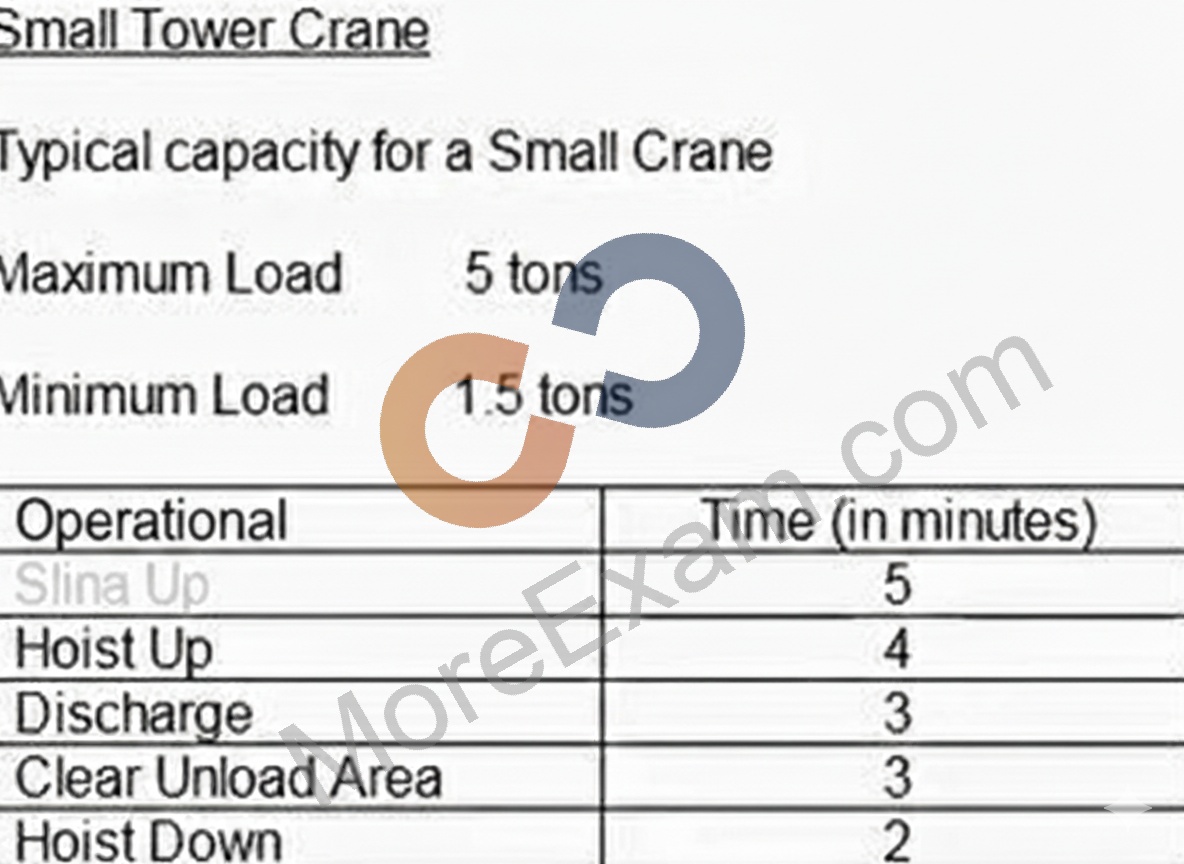
Question31: Each column must be poured in one day. Each column requires 2,000 cubic feet of concrete. The lift bucket has a capacity of 40 cubic feet. How many lifts will be required per column pour?

Question32: Theoretically construct a summary activity for activities 2001 through 2004. Using the "normal" schedule, what is the cost of the hammock?

Question33: An earned value-based project control system can use either of which two budgets as the basis of its calculations?

Question34: What activities are concurrent to Activity 2001 in the "normal" schedule?

Question35: What problems can a soils engineer deal with on a project?

Question36: In its simplest form, what is the main drawback of critical path method scheduling?

Question37: These are the activities on the critical path:

Question38: Identify the late finish to develop plans and specs.

Question39: In the "normal" schedule, excluding Activity 1000, what activity(s) are concurrent with Activity 3001?